Yes, it's been a busy time of the year! Most of us are in school full time or working full time and we just don't have the spare time to read (or write) blog posts!
That's just my excuse for not writing anything for a while.
We've hit November and the first cold spell is upon us. It has been incredibly dry and because of that I have been soaking grain every feeding for many weeks. Now I've been adding salt and starting our wonderful wheat bran mashes as the cold weather creeps in.
I've consulted with our vet and she thinks our farm management is as safe as it can be as far as avoiding colic. She says now we just keep our fingers crossed that everyone stays happy!
It's that time of year again - BLANKETS! I've brushed all the spiders and dust off your blankets but if they are stinky, musty, moldy, poopy you will need to wash them (or pay me to wash them!). I certainly don't want to be handling stinky blankets all winter, but more importantly I doubt your horse wants to smell like year-old moldy excrement. Remember that after it is clean it needs time to dry, so don't clean it right before we have a cold night!
The stall schedule will change as soon as the weather evens out. Stall boarders will begin staying in the barn at night and will be out during the day. To avoid the stress of change I like to do this gradually and so you will notice that your horse may be in or out at odd times while I allow them to adjust to the change.
At this time I am blanketing the horses with shorter coats (Magic, Cas, Shellie, KC, Molly) below 40 degrees. I typically prefer to blanket older horses at warmer temperatures (below 45) because they have less fat and muscle to keep them warm. However, 3 of our 5 oldest horses have very thick winter coats and are well adjusted to this weather. Betsy, for example, lived in snow in Illinois her entire life! She would be very annoyed with me if I didn't allow her to enjoy the chilly Florida weather. On especially cold evenings I will bring the old horses into the barn where it tends to stay about 10 degrees warmer than outside.This way they don't burn calories trying to stay warm.
Let me know what your horse is accustomed to and how well they tolerate the cold. JW, for example, does not tolerate the cold weather very well and needs blanketing at warmer temps than others. Dancer shivers in 50 degree weather. Satin is fine without a blanket but tolerates wearing one (for mom's sake) at colder temps.
As I put blankets on horses for the first time since last winter I was loosening everyone's belly straps! Cas, especially, has grown quite a bit. Magic and Molly both need some more room. Even Shellie's blanket was so snug that I couldn't clip her belly straps! I definitely like them a little on the heavier side during the cold months.
Stay warm and enjoy the Florida winter!
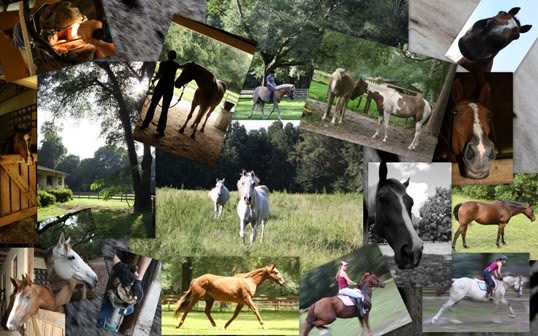
Every day, a little something about your horses
Saturday, November 6, 2010

Thursday, August 26, 2010
Nearing the end of August
We've recently had lots of rain and the pastures are exploding -- well, the big pastures are! We've had to sacrifice the pastures on the 'barn side' of the farm in order for the others to grow, grow, grow. But you should see how gorgeous the green, lush stems of forage look out in Pasture 5. The gelding herd will be thrilled!
As of now the plan is to move Magic, Cas, Aidan, Irish, JW, and KC over to Pasture 5 on September 1st. This may change a little bit because of property issues, but I am doing all that I can to make sure the horses health and happiness are priority number one.
I foresee having all 6 geldings over there for at least two weeks, at which time I will decide whether or not to bring the stall boarders (Irish, JW, KC) over to the barn side. But we'll see how the grass holds up and all that jazz.
Dancer and Shellie will likely be going out to Pasture 4 on the other side and all pastures on the barn sides will be empty for growing!

 Poor Molly was abused before Susan rescued her. Her tongue was sliced to cause pain and sensitivity in her mouth for "better" response to the bit. But she's a happy, spoiled girl now and for the past few days has been free roaming the barn side of the farm, teasing the boys and stealing hay!
 September is just around the corner!
As of now the plan is to move Magic, Cas, Aidan, Irish, JW, and KC over to Pasture 5 on September 1st. This may change a little bit because of property issues, but I am doing all that I can to make sure the horses health and happiness are priority number one.
I foresee having all 6 geldings over there for at least two weeks, at which time I will decide whether or not to bring the stall boarders (Irish, JW, KC) over to the barn side. But we'll see how the grass holds up and all that jazz.
Dancer and Shellie will likely be going out to Pasture 4 on the other side and all pastures on the barn sides will be empty for growing!

Dr. Bess Darrow performed dentals on Satin, Shellie, Molly, and Aidan on August 24th. Her new trailer is pretty awesome! Everyone loaded up the ramp pretty easily (well, we didn't try Aidan since he has a history or trailer trauma, so we didn't want to traumatize him further). The sedative wore off very quickly and everyone was back to their normal self soon after the event. The rain made for a cool and breezy day - it was great! I am scheduling another dental day in the future for Cas, Magic, Irish, Dancer, and whoever else needs it.


Monday, August 16, 2010
Merging Herds
I successfully merged herds yesterday. Adding a single horse to a herd is simpler than combining two sets of horses with their own set of hierarchy.
Magic is definitely king of the hill, though JW would like everyone to think that he only 'lets' Magic in the lead role because he's retired. JW holds on firmly to his "second in command" position and has fought intensely to maintain it in the past.
This type of behavior is very common in the #2 horses. It is a special position being numero dos in a herd; you get lots of perks like sharing hay with alpha horse, eating near alpha horse, and following alpha horse around. So you can see why they try hard to maintain this rung on the hierarchy ladder.
Casanova is a playful baby but at 5 years old he's feeling his oats. He has lightning fast reflexes and may try to put the bull on younger, slower herd mates.
So where will Irish and Aidan fall into the hierarchy?
Well, Irish is dominant over Aidan, although Aidan is constantly trying to change this fact. He loses every game and instigates more. He thinks he'll win one of these days.
Irish and Aidan are both young and young horses are generally more submissive to new, older horses.
I started with Magic and Cas in their pasture and added Aidan. Literally nothing happened for 20 minutes. They started grazing immediately after I put him in the pasture. Uneventful is an understatement.
Then came Irish. Aidan is very attached to his big brother and wanted to be near him. They paired up and kept to themselves with Cas following curiously behind. Cas pinned his ears and shooed them away a few times, but nothing aggressive. Cas wanted them tall boys to know that the little guys have what it takes.
Then JW.
My biggest concern was how JW would treat Irish. JW has shown aggression towards horses that threaten his position before. Irish is a confident boy with potential to move up the ladder.
I was pleasantly surprised to see everyone lazily sniffing one another, no squeals or kicks or bites.
There is definitely a benefit to introducing horses over a fence first!
I drove by their pastures early this morning on my way in from work and the 5 of them were sleeping in a tight little herd under the trees. Happy ending!
Magic is definitely king of the hill, though JW would like everyone to think that he only 'lets' Magic in the lead role because he's retired. JW holds on firmly to his "second in command" position and has fought intensely to maintain it in the past.
This type of behavior is very common in the #2 horses. It is a special position being numero dos in a herd; you get lots of perks like sharing hay with alpha horse, eating near alpha horse, and following alpha horse around. So you can see why they try hard to maintain this rung on the hierarchy ladder.
Casanova is a playful baby but at 5 years old he's feeling his oats. He has lightning fast reflexes and may try to put the bull on younger, slower herd mates.
So where will Irish and Aidan fall into the hierarchy?
Well, Irish is dominant over Aidan, although Aidan is constantly trying to change this fact. He loses every game and instigates more. He thinks he'll win one of these days.
Irish and Aidan are both young and young horses are generally more submissive to new, older horses.
I started with Magic and Cas in their pasture and added Aidan. Literally nothing happened for 20 minutes. They started grazing immediately after I put him in the pasture. Uneventful is an understatement.
Then came Irish. Aidan is very attached to his big brother and wanted to be near him. They paired up and kept to themselves with Cas following curiously behind. Cas pinned his ears and shooed them away a few times, but nothing aggressive. Cas wanted them tall boys to know that the little guys have what it takes.
Then JW.
My biggest concern was how JW would treat Irish. JW has shown aggression towards horses that threaten his position before. Irish is a confident boy with potential to move up the ladder.
I was pleasantly surprised to see everyone lazily sniffing one another, no squeals or kicks or bites.
There is definitely a benefit to introducing horses over a fence first!
I drove by their pastures early this morning on my way in from work and the 5 of them were sleeping in a tight little herd under the trees. Happy ending!
Saturday, August 14, 2010
Pasture Rotation
Friday the 13th was an uneventful day at the farm. Lots of rain, which is always welcome.
The horses enjoyed the rain and continued to graze as it poured down on top of them. The horses in the stalls were happy for a breeze and for the extra hay I gave them while we waited out the weather.
We'll be keeping the herds where they are until September 1st, at which time we will make some changes. Hopefully we can combine Magic, JW, and Cas with Irish and Aidan - the 5 of them will go out to pasture 5 (that's the southern pasture on the "other side"). Pasture 5 has been mowed and dragged and rested for 30 days. The grass is growing nicely, so these boys will be happy we've managed our pastures. We may also be adding KC to their herd, depending on how everyone gets along. Young Aidan may be going off to school to learn to tote humans around on his back politely - I will miss him because I am already in love! He's so smart!
Dancer and Shellie are currently in Pasture 1, they may be going back to pasture 4 with the oldies for a while. It depends on the grass, so we'll see.
You may have noticed that some of the water troughs are filled with brownish-red water. It's unsightly, but it is only rust from their troughs and won't harm them. They've been scrubbed with bleach very recently and are still ugly, so I am working on finding some higher quality rubber/plastic troughs.
JW had his dental and has excellent teeth! He's in his early 20's and he hardly needed a float. Dr. Bob said that's because he's had such good dental care all his life. He will only need dentals every 18 months or so, even at his age. Jedi and Ufir are contrasts to JW, their teeth have not been cared for and their molars looks like jagged mountains. Jedi was not gaining weight after his arrival last year so I had the dentist out. Just a few weeks after his float he started packing on the pounds. His counterpart, Ufir, also needs her teeth done. If they had been floated consistently all their life this would not be such a concern. It's a good lesson for all of us!
Dr. Bess Darrow is coming out soon to do everyone else.
http://www.tuneupsequine.com/Site/Tune_Ups_Veterinary_Equine_Dentistry.html
The horses enjoyed the rain and continued to graze as it poured down on top of them. The horses in the stalls were happy for a breeze and for the extra hay I gave them while we waited out the weather.
We'll be keeping the herds where they are until September 1st, at which time we will make some changes. Hopefully we can combine Magic, JW, and Cas with Irish and Aidan - the 5 of them will go out to pasture 5 (that's the southern pasture on the "other side"). Pasture 5 has been mowed and dragged and rested for 30 days. The grass is growing nicely, so these boys will be happy we've managed our pastures. We may also be adding KC to their herd, depending on how everyone gets along. Young Aidan may be going off to school to learn to tote humans around on his back politely - I will miss him because I am already in love! He's so smart!
Dancer and Shellie are currently in Pasture 1, they may be going back to pasture 4 with the oldies for a while. It depends on the grass, so we'll see.
You may have noticed that some of the water troughs are filled with brownish-red water. It's unsightly, but it is only rust from their troughs and won't harm them. They've been scrubbed with bleach very recently and are still ugly, so I am working on finding some higher quality rubber/plastic troughs.
JW had his dental and has excellent teeth! He's in his early 20's and he hardly needed a float. Dr. Bob said that's because he's had such good dental care all his life. He will only need dentals every 18 months or so, even at his age. Jedi and Ufir are contrasts to JW, their teeth have not been cared for and their molars looks like jagged mountains. Jedi was not gaining weight after his arrival last year so I had the dentist out. Just a few weeks after his float he started packing on the pounds. His counterpart, Ufir, also needs her teeth done. If they had been floated consistently all their life this would not be such a concern. It's a good lesson for all of us!
Dr. Bess Darrow is coming out soon to do everyone else.
http://www.tuneupsequine.com/Site/Tune_Ups_Veterinary_Equine_Dentistry.html
Saturday, August 7, 2010
August in Florida means...
The peak of summer in Florida brings heat, humidity, some rain here and there, high electric bills, parasitic insects, runny eyes, copious amounts of weeds... Those are some negatives of our summers, but what about the positives? Well, for me personally, "not cold" is enough to keep me happy! But we also get to enjoy long days where it's still daylight at 8:00pm, lots of green forage, no blankets, hydrated hooves, and... well, what do you enjoy about summer?
The barn electricity has been sky high with fans running almost non-stop morning til dark. The water pump is also electric and we're refilling troughs twice a day. During these hottest months the electric bill is about 3 times higher than our average. Impressive!
The black fly population has finally died down. I thought we'd never get a reprieve from the billions of little buzzing buggers but their numbers have dwindled. Donkeys are surprisingly susceptible to insect parasitism, so they absolutely have to wear their fly masks during day light hours. Karma has already had two bouts of eye infections. They also seem to be more sensitive to insect bites as well, but keeping them drenched in fly spray is a challenge as it is a donkey's nature to roll, roll, roll in the dirt. Some of the more sensitive horses are getting steroid sprays and injections to keep them comfortable.
The mosquitoes haven't been bad this year which is definitely something to celebrate! Of course it's not the wettest season yet, so keep your fingers crossed and your DEET handy.
Have you seen the new mower? The "Green Meanie" is an old model John Deere with no brakes and a tiny deck, but it's a beast and can push through the thickest weeds. It takes about twice as long to mow a pasture, but the machine does its job. Our landlord's mower, although a nice piece of equipment, could not cut through the weeds. Our best option last year was to rent a heavy duty, walk-behind brush mower every few weeks. Not only was this costly but the labor was intense. We finally had just enough cash to buy this decade-old, quirky John Deere rider, and we're finding that it was the perfect investment. Buying an ancient piece of equipment has its downsides, but it was vetted and past the test so we're hoping it still has a lot of life left in it. At least a few more summers!
We've also upgraded to a golf cart! My mother helped carry buckets of feed across the farm the last time she visited and she took mercy on me - she let me borrow her golf cart! Although a wonderful gesture, borrowing anything from a parent is complicated, so we'll have to keep impeccable care of it. It's worth it if you ask me!
I hope you're finding time to enjoy the beauty of the Florida summer!
The barn electricity has been sky high with fans running almost non-stop morning til dark. The water pump is also electric and we're refilling troughs twice a day. During these hottest months the electric bill is about 3 times higher than our average. Impressive!
The black fly population has finally died down. I thought we'd never get a reprieve from the billions of little buzzing buggers but their numbers have dwindled. Donkeys are surprisingly susceptible to insect parasitism, so they absolutely have to wear their fly masks during day light hours. Karma has already had two bouts of eye infections. They also seem to be more sensitive to insect bites as well, but keeping them drenched in fly spray is a challenge as it is a donkey's nature to roll, roll, roll in the dirt. Some of the more sensitive horses are getting steroid sprays and injections to keep them comfortable.
The mosquitoes haven't been bad this year which is definitely something to celebrate! Of course it's not the wettest season yet, so keep your fingers crossed and your DEET handy.
Have you seen the new mower? The "Green Meanie" is an old model John Deere with no brakes and a tiny deck, but it's a beast and can push through the thickest weeds. It takes about twice as long to mow a pasture, but the machine does its job. Our landlord's mower, although a nice piece of equipment, could not cut through the weeds. Our best option last year was to rent a heavy duty, walk-behind brush mower every few weeks. Not only was this costly but the labor was intense. We finally had just enough cash to buy this decade-old, quirky John Deere rider, and we're finding that it was the perfect investment. Buying an ancient piece of equipment has its downsides, but it was vetted and past the test so we're hoping it still has a lot of life left in it. At least a few more summers!
We've also upgraded to a golf cart! My mother helped carry buckets of feed across the farm the last time she visited and she took mercy on me - she let me borrow her golf cart! Although a wonderful gesture, borrowing anything from a parent is complicated, so we'll have to keep impeccable care of it. It's worth it if you ask me!
I hope you're finding time to enjoy the beauty of the Florida summer!
Saturday, July 31, 2010
Wrapping up July
If you were wondering where you're at, July has confirmed that we are definitely in Florida! With heat indexes in the 100's, the horses are seeking refuge in the shade as much as possible. I'm adding electrolytes and minerals to their grain and soaking feed at least 3 times per week. Horses are getting sprayed down left and right and I catch them playing in their trough puddles in the heat of the day. The life of luxury, no?
Sadly, we bid farewell to adorable pony face, Bodhi, as he embarks on his life-changing journey to join his mother in Canada. What fun! He was a prince for me while walking through the darkness of dawn to meet the massive (literally the biggest horse transport rig I have ever seen) at the paved road. He loaded without hesitation and was playing in his box stall shavings before they pulled off. Safe travels, sweet Bodhi! And enjoy the Canada weather! We know you will.
Paths change and we are forced to make difficult choices, and unfortunately we must say goodbye to not one, but four horses! We will surely miss the adorableness of Bodhi, the polite independence of Dusty, Tav's child-like curiosity, and Pokey's noble nature.
Congratulations to Ashley on her newest addition, a very handsome, young Thoroughbred boy named Anthony! Hopefully Anthony can keep up with Pokey's play drive!
We expect lots of updates from our friends who have to leave us! You and your horses will be missed!
On the heels of horses bidding farewell is the arrival of a few new horses and their humans. Welcome Mary and her two handsome Irish Draughts, Irish and Aiden. I'm looking forward to meeting these two boys and getting to know them. I bet they would enjoy a good romp with big boy Magic and little man Casanova. JW will just have to stand back and supervise those youngins. Irish, Aiden, and mom Mary will be arriving today!
And in two weeks we look forward to welcoming Morgan and her gelding, KC! She'll be attending the University of Florida in the fall - how exciting!
And as today is the last day in July, we say goodbye to another summer month gone by without a donkey foal. C'mon, Karma, how long must we wait?!
Sadly, we bid farewell to adorable pony face, Bodhi, as he embarks on his life-changing journey to join his mother in Canada. What fun! He was a prince for me while walking through the darkness of dawn to meet the massive (literally the biggest horse transport rig I have ever seen) at the paved road. He loaded without hesitation and was playing in his box stall shavings before they pulled off. Safe travels, sweet Bodhi! And enjoy the Canada weather! We know you will.
Paths change and we are forced to make difficult choices, and unfortunately we must say goodbye to not one, but four horses! We will surely miss the adorableness of Bodhi, the polite independence of Dusty, Tav's child-like curiosity, and Pokey's noble nature.
Congratulations to Ashley on her newest addition, a very handsome, young Thoroughbred boy named Anthony! Hopefully Anthony can keep up with Pokey's play drive!
We expect lots of updates from our friends who have to leave us! You and your horses will be missed!
On the heels of horses bidding farewell is the arrival of a few new horses and their humans. Welcome Mary and her two handsome Irish Draughts, Irish and Aiden. I'm looking forward to meeting these two boys and getting to know them. I bet they would enjoy a good romp with big boy Magic and little man Casanova. JW will just have to stand back and supervise those youngins. Irish, Aiden, and mom Mary will be arriving today!
And in two weeks we look forward to welcoming Morgan and her gelding, KC! She'll be attending the University of Florida in the fall - how exciting!
And as today is the last day in July, we say goodbye to another summer month gone by without a donkey foal. C'mon, Karma, how long must we wait?!
Thursday, July 15, 2010
Poinsonous Plants
** This post has been in draft-form for 2 weeks! And you might be interested to hear that I typed this up before having an issue with a bale of contaminated alfalfa hay. Hmmm!
"Poisonous plants" is a scary topic, but I hope to dispel your fears with a little education.
The questions that come to mind are:
1) How likely is it for my horse to get sick from poisonous plants?
2) How much does he have to eat to become ill?
3) How will I know he's been poisoned?
4) What do the poisonous plants look like?
Fortunately for us, small, private boarding facilities generally don't have a problem with poisonous plants when there is good management. You see most poisonings from horses eating hay that has been baled from a pasture full of these weeds or from horses eating the clippings of a freshly mowed pasture. Most poisonous weeds are thorny, smelly, and simply unappetizing, but that doesn't stop some horses from behaving quite opposite to their ancestors and feral counterparts.
So how likely is it for my horse to get sick from poisonous plants? Well, to all you number-nerds, I don't have the statistics, but it is a rare occurrence that a horse will consume enough of the poisonous plant in our pasture setting to get sick. The few poisonous weeds that we see commonly in our area are just not appealing to the equine pallet in the form of a live, growing weed. If they were dried and shredded and stuck in your horse's flake of coastal then you would definitely have need to worry! But have no fear, I know the weed management protocols of our hay grower and he does an excellent job of keeping weeds from his pastures.
Let's say your horse get bored, curious, or thoughtlessly consumes a poisonous weed. How much does she have to eat to become ill? The answer to this question varies from plant to plant, depending on toxicity. The part of the plant that contains the toxin also varies. Leaves, stem, berries, roots... But no matter which plant he's consumed, the treatment is very similar - supportive care in the form of fluids and alternatively, herbal remedies to detoxify.
So far we know that is it very unlikely for a horse to eat the unappetizing weeds, and even when curiosity overrides instinct the horse has to eat more than just a few bored nibbles. So when is it a real concern?
Well, when it's in the hay (or, in the case of our recent issue, when it's come into contact with the hay), or when there are fresh, shredded clippings after mowing.
Again, have no fear! I do not mow over the poisonous weeds for this very reason. Call me crazy, but I actually pull up and toss (into the woods) the poisonous weeds. We have so few that this is feasible.
And how will you know if your horse has been poisoned? Mainly gastrointestinal signs such as diarrhea, but also fever, lethargy, laminitis. In the case of our contaminated alfalfa, horses had swollen lips and tongue. This was a result of a plant like stinging nettles, one that causes contact dermatitis. A little bute as per our veterinarian and everyone was fine.
And last, but certainly not least, on the list of common questions is "What do they look like?"
I thought it would be helpful to document in picture form all the poisonous weeds on our farm. So here they are:
Pigweed:


"Poisonous plants" is a scary topic, but I hope to dispel your fears with a little education.
The questions that come to mind are:
1) How likely is it for my horse to get sick from poisonous plants?
2) How much does he have to eat to become ill?
3) How will I know he's been poisoned?
4) What do the poisonous plants look like?
Fortunately for us, small, private boarding facilities generally don't have a problem with poisonous plants when there is good management. You see most poisonings from horses eating hay that has been baled from a pasture full of these weeds or from horses eating the clippings of a freshly mowed pasture. Most poisonous weeds are thorny, smelly, and simply unappetizing, but that doesn't stop some horses from behaving quite opposite to their ancestors and feral counterparts.
So how likely is it for my horse to get sick from poisonous plants? Well, to all you number-nerds, I don't have the statistics, but it is a rare occurrence that a horse will consume enough of the poisonous plant in our pasture setting to get sick. The few poisonous weeds that we see commonly in our area are just not appealing to the equine pallet in the form of a live, growing weed. If they were dried and shredded and stuck in your horse's flake of coastal then you would definitely have need to worry! But have no fear, I know the weed management protocols of our hay grower and he does an excellent job of keeping weeds from his pastures.
Let's say your horse get bored, curious, or thoughtlessly consumes a poisonous weed. How much does she have to eat to become ill? The answer to this question varies from plant to plant, depending on toxicity. The part of the plant that contains the toxin also varies. Leaves, stem, berries, roots... But no matter which plant he's consumed, the treatment is very similar - supportive care in the form of fluids and alternatively, herbal remedies to detoxify.
So far we know that is it very unlikely for a horse to eat the unappetizing weeds, and even when curiosity overrides instinct the horse has to eat more than just a few bored nibbles. So when is it a real concern?
Well, when it's in the hay (or, in the case of our recent issue, when it's come into contact with the hay), or when there are fresh, shredded clippings after mowing.
Again, have no fear! I do not mow over the poisonous weeds for this very reason. Call me crazy, but I actually pull up and toss (into the woods) the poisonous weeds. We have so few that this is feasible.
And how will you know if your horse has been poisoned? Mainly gastrointestinal signs such as diarrhea, but also fever, lethargy, laminitis. In the case of our contaminated alfalfa, horses had swollen lips and tongue. This was a result of a plant like stinging nettles, one that causes contact dermatitis. A little bute as per our veterinarian and everyone was fine.
And last, but certainly not least, on the list of common questions is "What do they look like?"
I thought it would be helpful to document in picture form all the poisonous weeds on our farm. So here they are:
Pigweed:


Subscribe to:
Comments (Atom)